


A brief circle or flash as you drift off can be part of a sleep-onset visual experience. Light can also come from a real source nearby, and some visual symptoms need an eye exam. Start with when it happened: while dozing, just after you woke up or while you were fully awake. Sudden new flashes, many new floaters or a dark curtain in your vision call for urgent eye care.
What a sleep-onset image can feel like
The Cleveland Clinic’s overview of hypnagogic experiences describes patterns, shapes or flashes that may occur as the person falls asleep. The term describes the timing of an experience. A circle’s shape or color alone cannot tell you its cause.
Notice whether you were about to nod off and whether the light faded when you became fully alert. Check for light from a hallway, a street or a device in the room. If you keep getting unexplained visual changes while fully awake, an eye care or health professional can help work out what is happening.
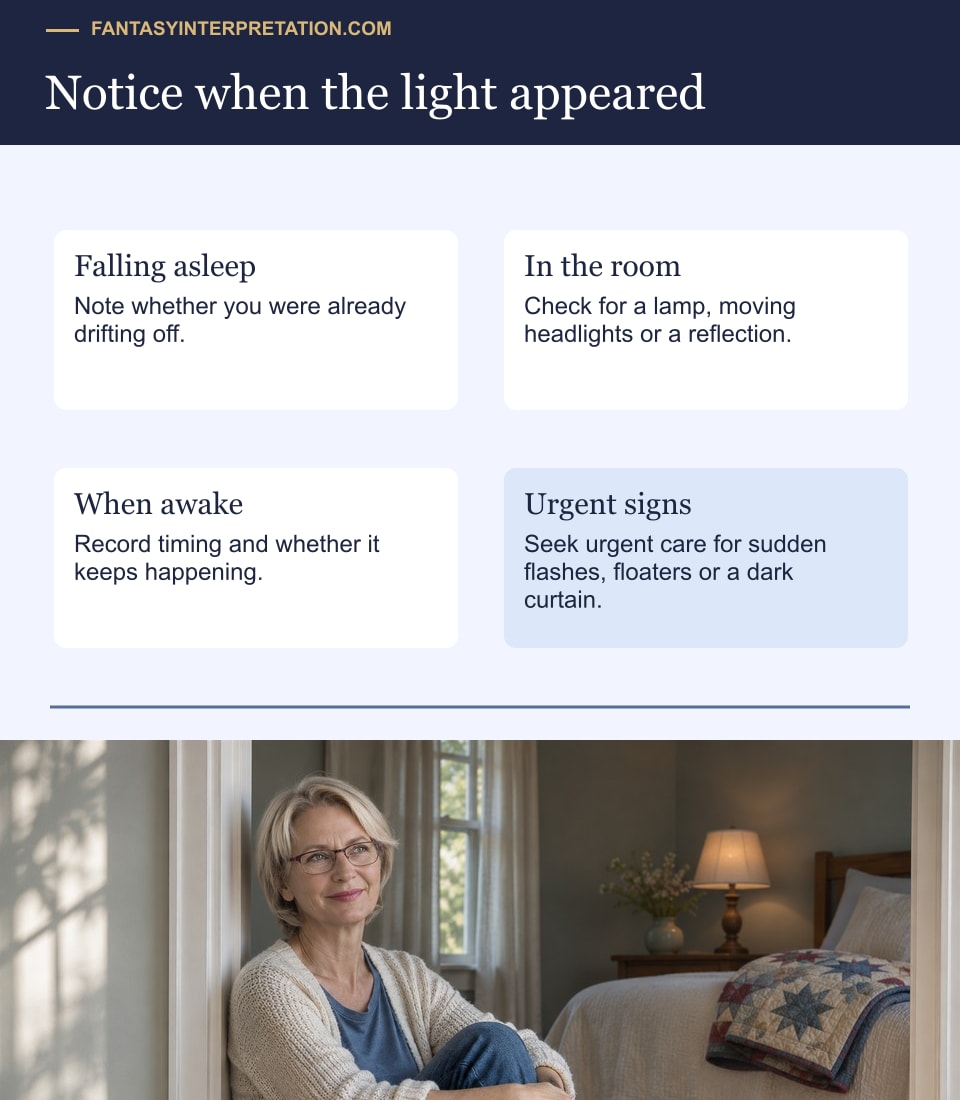
Read the visual guide as text
- Falling asleep. Note whether you were already drifting off.
- In the room. Check for a lamp, moving headlights or a reflection.
- When awake. Record timing and whether it keeps happening.
- Urgent signs. Seek urgent care for sudden flashes, floaters or a dark curtain.
A soft blue circle as you settle
Suppose you are half asleep and briefly see a small soft blue circle. It fades when you turn on the ordinary bedside light and sit up. If it has passed and there are no urgent signs, note when it happened, roughly how long it lasted and whether it returned when you were alert. You can return to bed once you feel ready.
Suppose instead the light is a sudden new flash while you are fully awake and a spray of new floaters follows. That is a different situation. The National Eye Institute’s retinal detachment guidance calls for immediate care for warning signs such as sudden new flashes or floaters and a curtain or shadow in vision. Call an eye doctor right away or go to an emergency department.

When to bring it up and when to leave the journal closed
If the experience recurs, disrupts sleep or comes with marked daytime sleepiness, talk with a clinician. You can mention what time it happens, whether you are fully awake, any recent medication changes and whether it also happens outside the bedroom. There is no need to wait for several episodes before asking about symptoms that worry you.
If you like reflecting on dreams, you can use a color as a loose association the next day. For example, “The blue made me think of the sea, and I remembered how much I want a quiet morning.” Give health symptoms their own note so that the spiritual interpretation and the clinical description both stay clear.
Frequently asked questions
1. What are hypnagogic visual experiences?
They are visual experiences that occur as you fall asleep. Some people see patterns, colors, shapes or brief flashes.
2. Can I identify the cause by the color?
Color alone does not identify whether the light came from the room, sleep onset or another source.
3. What details are useful to share with a clinician?
Describe when the light appeared, whether you were awake, how long it lasted and any other changes in vision or sleep.
4. When is urgent eye care needed?
Seek urgent care for sudden new flashes, many new floaters or a shadow or curtain in your vision.
5. What if it keeps interrupting my sleep?
Talk with a clinician if it repeatedly disrupts sleep, happens while fully awake or comes with significant daytime sleepiness.