


When you feel that you’re the only one trying to save the relationship, it can be tiring. When one partner wants to have a conversation, plan dates, seek an emotional connection, or suggest solutions, while the other person acts distant or uninterested in trying, it can cause loneliness in the relationship.
People might ask themselves questions during these times, wondering whether their partner still loves them or if they are the only one fighting to save the relationship. Though these feelings are understandable, the reality can be that the reasons are more complicated than your partner falling out of love.
Most relationship problems aren’t about one person being good and the other partner being bad, but most of the time, fear, stress, emotional withdrawal, or unresolved situations like resentment are causing the hurt in the relationship.
The American Psychological Association talks about how stress and unresolved tension can affect empathy, patience, and emotional responsiveness between partners. This means that a partner who seems to be emotionally unavailable might actually be afraid, overwhelmed, or emotionally shut down instead of uncaring.
Understanding the deeper issues in the relationship can help you to look at the situation with more clarity and emotional balance.
Partners Avoiding Relationship Work
Here are some reasons that people avoid working on their relationships:
-
They Feel It’s Good Enough
One of the hardest things to accept is that people experience relationships differently. Your partner might really believe that the relationship is good, but sometimes the other partner feels disconnected or neglected.
The difference in how they see the relationship can cause confusion on both sides. Where one person feels that this is a problem, the other one might not realize that anything is wrong. They might not know why you are unhappy when there isn’t any conflict.
This doesn’t mean that your emotional needs aren’t met, but it means that the emotional satisfaction can be personal. Some people want to have constant emotional intimacy, communication, and reassurance, and others might feel more secure without having emotional interaction.
By recognizing these differences, expectations can change conversations from blame to understanding.
-
Conflict Avoidant
There are some people who avoid having relationship conversations because the conflict feels threatening to them. People who avoid conflict, talking about feelings, relationship problems, or intimacy can become anxious instead of connected. Instead of seeing hard conversations as a way of healing, they might feel that they are being rejected, criticized, or that their partner is creating chaos.
Harvard Health Publishing talks about how emotional avoidance patterns can develop as coping mechanisms that were created earlier in life. Some people learned that emotional confrontation means pain, instability, or confrontation.
This resulted in avoidance as a survival strategy, even when they care about their partner and the relationship.
-
Feeling Helpless
There might be times when a partner knows that the relationship is struggling, but they don’t know how to fix it. When people don’t feel emotionally strong, they might withdraw instead of trying to fix things.
These situations might cause partners to feel that they are disappointing their partner, failing, or causing more problems in the relationship. Instead of risking feeling inadequate, they feel free.
This often happens when communication patterns are already stressed or emotionally charged. If each relationship discussion turns into defensiveness, frustration, or criticism, the partner who feels emotionally overwhelmed might stop trying to fix the relationship because they feel that nothing they can do will work.
-
Outside Stress
Not all emotional distance comes from the relationship, but can come from things like job pressures, burnout, responsibilities, health situations, financial stress, or exhaustion, which can cause someone to be emotionally unavailable. When someone feels overwhelmed, the relationship might not be a priority.
Couples today don’t always realize how external stress can really affect emotional intimacy. When someone works long hours, has digital distractions, tiredness, and economic uncertainty, this can weaken the connections without couples realizing it.
Healthy relationships mean being intentional instead of just thinking that love can keep the connection strong.
-
Emotional Withdrawal
Sometimes partners will emotionally disconnect from each other after long periods of hurt, broken trust, resentment, and disappointment.
Emotional withdrawal doesn’t normally happen after one thing, but it develops slowly after repeated pain, failed communication, or feeling misunderstood.
There are some partners, though, who only try to start fixing the relationship after their partner completely shuts down. But by then, the problem is that reconnecting might be harder because emotional exhaustion has already happened for years. This is why it’s important to address these situations right away.
Approaching Your Partner Effectively
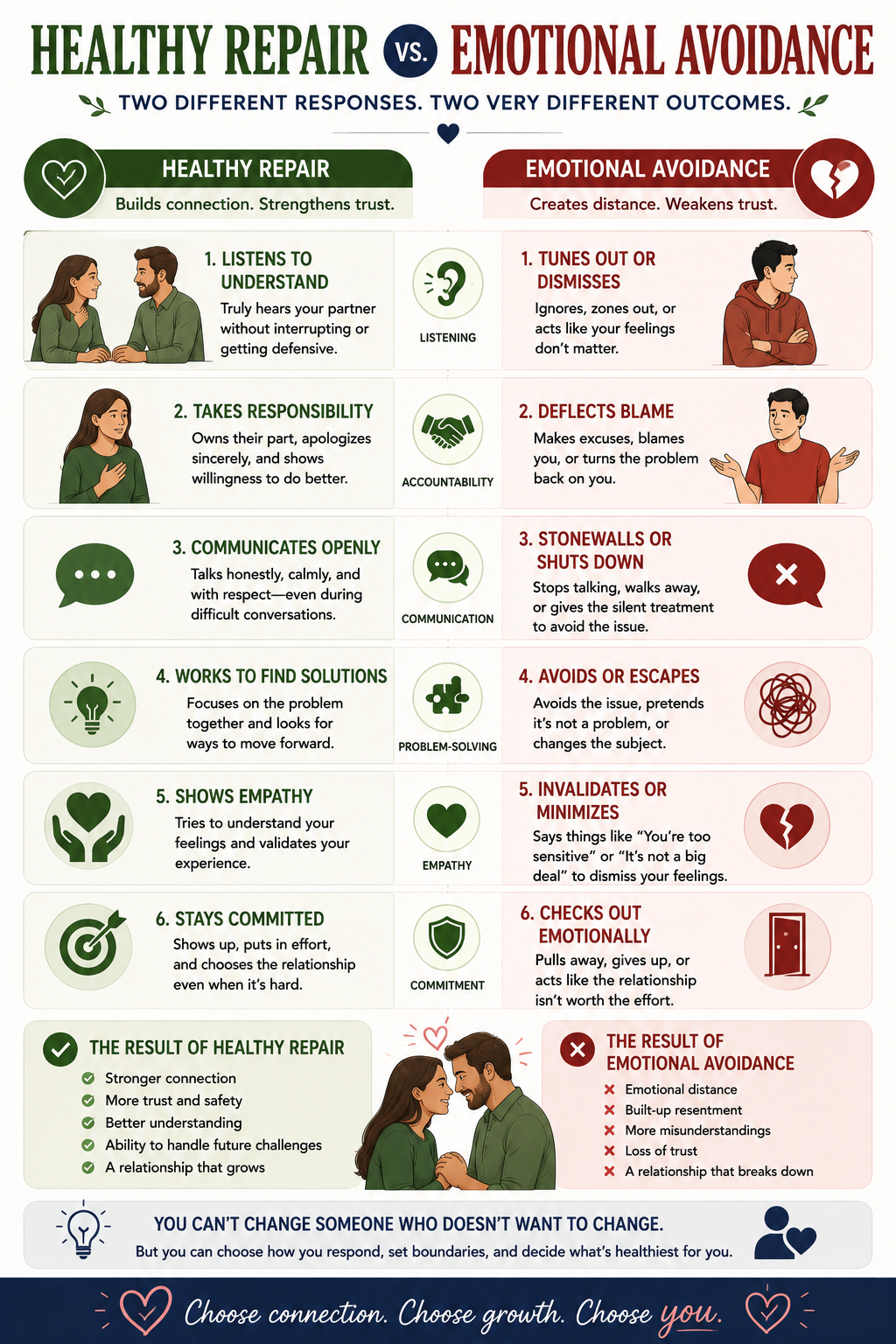
Here are some ways that you can approach your partner effectively:
-
Making a Positive Connection
People often get defensive when they feel that they are being attacked. Instead of starting a conversation by complaining or criticizing, it’s important to tell your partner that you value the relationship. Talk about how you miss the connection that used to be there, how much you love your life together, and how you want to be closer.
Doing this creates emotional safety instead of resistance. Some experts talk about how emotional tone matters just as much as what’s being said. Conversations that start gently are more productive.
-
Avoid Blame
When someone feels that they are being blamed, they often stop listening and become self-protective. Saying things like:
- You never care about me.
- You are always ignoring me.
- You don’t try.
This can show pain, but then it can turn into defensiveness, and defensiveness doesn’t inspire change. It’s better to focus on describing what you’re feeling instead of focusing on what your partner did wrong. Instead, try to say things like:
- I feel like we’re disconnected lately.
- I miss feeling emotionally close to you.
- I’m scared we’re falling apart.
This change can help to turn the conversation from defensiveness to care.
-
Setting Boundaries
Having healthy boundaries is important, but they can also create resistance instead of cooperation. There is a difference between saying, “I need us to be serious because the relationship matters,” and “If you don’t change, I’m done with you.”
The first conversation invites partnership and communication, and the other one invites shutdown, fear, and emotional withdrawal.
Boundaries need to have emotional honesty and leave room for solution, and not be rude or hurtful.
-
Forcing Others to Change
One of the things that people need to realize is that you can’t control what people do. If your partner isn’t willing to grow or communicate, that is something you can’t change.
Accepting this doesn’t mean you give up on the relationship; it means that you set limits on the relationship. Trying to force your partner to be emotionally open might cause more resistance. Real change comes when people feel understood, emotionally safe, and motivated without pressure.
This can be empowering because it redirects your energy to what you can change.
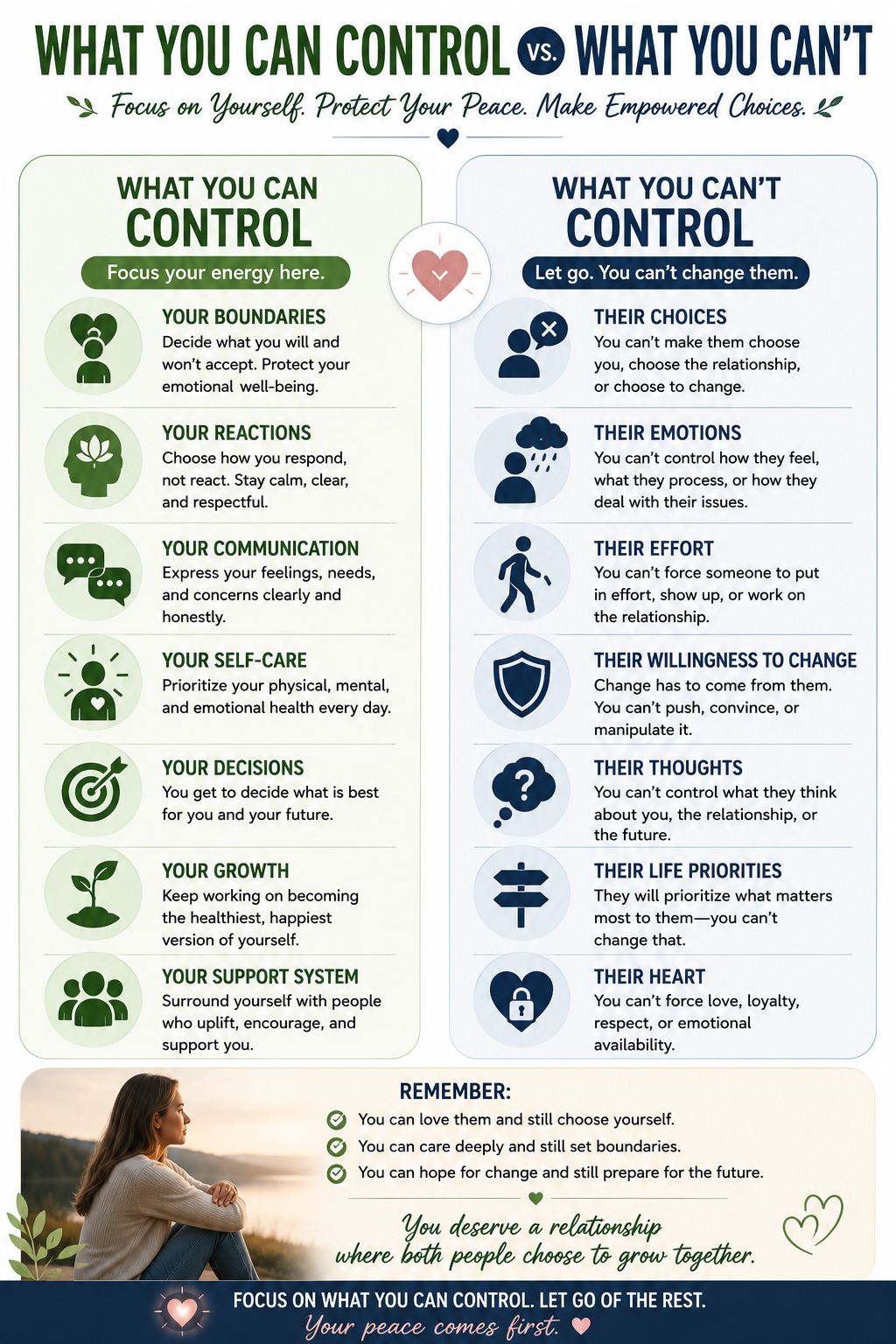
What To Do If Your Partner Refuses Change
Here’s what to do if your partner refuses to change:
-
Improve Communication Skills
If your partner resists what you’re doing, make positive changes in how you communicate. Learning to actively listen, to have patience, and to have healthy conflict resolution can reduce stress and create more openness as time goes on.
In some relationships, one partner will change their unhealthy habits, and this can change the environment for everyone involved.
-
Have Positive Experiences Together
Not all relationship conversations have to be about problems. Sharing positive experiences together can rebuild the emotional connection faster than always talking about problems. Plan to do things together like traveling, fun activities, reconnecting physically, or laughing.
When you create positive memories, it can fix emotional closeness, whereas always talking about relationship problems can cause more damage. Couples that have a real friendship and share enjoyable times together can work through hard situations more successfully.
-
Unrealistic Expectations
Relationships today often think that one person is in charge of creating a good relationship. Some people unconsciously think that their partner should be their:
- Therapist
- Best friend
- Soulmate
- Financial planner
- Entertainment
- Healer
- Teammate
- Companion
No one person can do all of these things and perfectly fill every role. Healthy relationships mean having emotional fulfillment between connections, hobbies, family, personal growth, friendships, and one’s own identity. By recognizing this, it can reduce the pressure on the relationship.
-
Getting Outside Help
Getting outside support doesn’t mean that your relationship is failing, and sometimes this kind of guidance can help couples to talk more effectively and to understand each other better.
Using books, education, communication workshops, self-development, and counseling can be valuable tools.
The National Institutes of Health talks about how relationship education and emotional communication skills can help to bring long-term relationship satisfaction and conflict management.
Even small improvements in the relationship can create big changes as time goes on.
Final Thoughts: Relationships and Phases
Long-term relationships have times of distance, closeness, growth, stress, and emotional changes. Falling in love might feel easy at first, but keeping emotional intimacy requires patience, adaptability, and mutual effort that is ongoing.
One thing to remember is that hard times don’t mean that the relationship is broken, and people can rebuild stronger emotional bonds even after a time of struggle. When partners are willing to try to understand each other better, healing can come.
The first step to healing is getting past assumptions, blame, and panic and having curiosity, compassion, and calm communication.
Frequently Asked Questions
1. What should I do if my partner won’t work on the relationship?
Start by having one calm, honest conversation about what you need and how the relationship is affecting you. If they still refuse to participate, focus on your boundaries, emotional health, and next steps.
2. Can one person fix a relationship alone?
No. One person can improve communication, set boundaries, and work on personal growth, but a healthy relationship requires effort from both partners.
3. What are signs my partner is avoiding relationship problems?
Common signs include changing the subject, shutting down, blaming you, refusing serious talks, dismissing your feelings, or promising change without action.
4. What is emotional avoidance in a relationship?
Emotional avoidance happens when someone refuses to face difficult feelings, conversations, accountability, or relationship problems.
5. What is healthy repair in a relationship?
Healthy repair means both partners are willing to listen, take responsibility, communicate respectfully, and work toward solutions after conflict.
6. How do I know if my relationship problems are fixable?
Problems are more likely to be fixable when both partners show respect, accountability, emotional safety, and a willingness to make real changes.
7. What if my partner says everything is fine but I’m unhappy?
Your feelings still matter. A partner does not have to agree with your experience for your needs, concerns, and emotional pain to be valid.
8. Should I keep asking my partner to change?
You can clearly explain what you need, but repeatedly begging or pleading often leads to exhaustion. After that, it may be healthier to set boundaries and observe their actions.
9. What boundaries can I set with an emotionally avoidant partner?
You can set boundaries around disrespect, repeated avoidance, unhealthy arguments, emotional neglect, and how long you are willing to stay in the same pattern.
10. Is it normal to feel lonely in a relationship?
It can happen, especially when emotional needs are ignored. However, feeling lonely all the time may be a sign that the relationship needs serious attention.
11. What if my partner refuses couples counseling?
If your partner refuses counseling, you can still seek individual support. Personal guidance can help you understand your options and protect your well-being.
12. How can I stop over-functioning in the relationship?
Stop carrying every conversation, apology, plan, and repair attempt by yourself. Give your partner room to show whether they are willing to participate.
13. What does a one-sided relationship look like?
A one-sided relationship often feels like one person is always initiating, apologizing, explaining, compromising, and trying to keep the connection alive.
14. Can emotional avoidance become emotional neglect?
Yes. When avoidance becomes a long-term pattern, the other partner may feel unseen, unsupported, and emotionally abandoned.
15. How do I communicate with a partner who shuts down?
Keep your words clear and calm. Use specific examples, avoid attacking language, and ask for one concrete next step instead of trying to solve everything at once.
16. What if my partner gets defensive every time I bring up problems?
Defensiveness can block repair. Try naming the pattern calmly, but if it continues, focus less on convincing them and more on what you need to feel emotionally safe.
17. When should I stop trying to fix the relationship?
You may need to stop trying when your partner repeatedly refuses effort, ignores your pain, breaks trust, or makes you feel emotionally unsafe.
18. How do I know if it is time to walk away?
It may be time to walk away if the relationship consistently harms your peace, your needs are dismissed, and there is no real willingness to change.
19. Can love be real even if the relationship is unhealthy?
Yes. Love can be real, but love alone does not make a relationship healthy. Respect, effort, safety, and accountability also matter.
20. What is the healthiest thing I can do right now?
The healthiest first step is to stop focusing only on changing your partner and start asking what you need, what you can control, and what protects your peace.